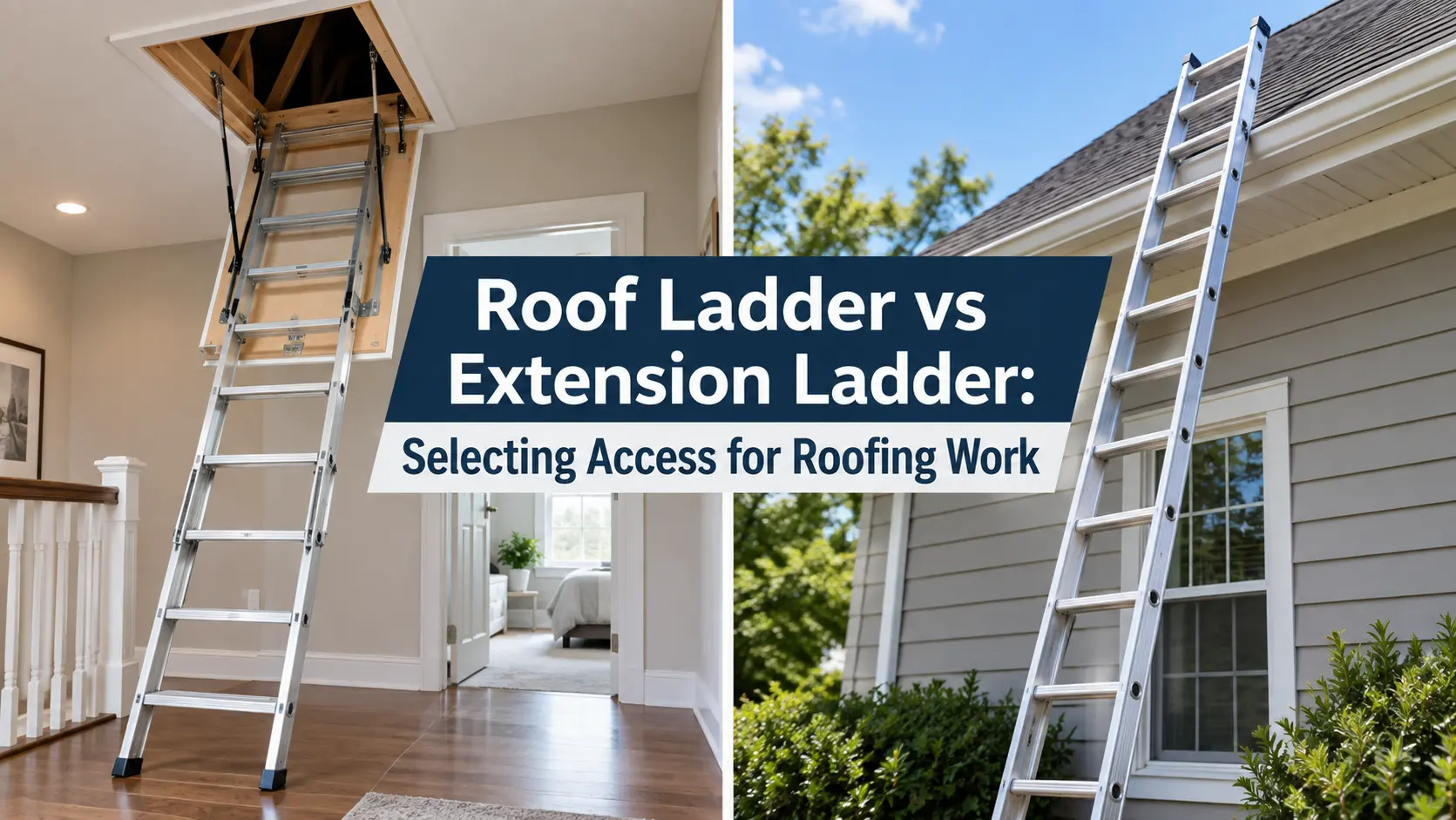
A roof ladder vs extension ladder decision begins by separating two jobs that are often confused: reaching the roof and working on the roof. An extension ladder can provide access from ground level to an approved upper point when set up correctly. A roof ladder is intended for use on a roof surface only when its design, instructions, roof condition and project controls permit it. One does not automatically replace the other.
For contractors, rental operators and project buyers, this distinction affects transport, product range, planning and user information. It also prevents a dangerous purchasing shortcut: buying the longest ladder available without defining where it will bear, how the worker will move and whether the roof work needs another access system. This article supports product comparison; it does not replace a site-specific risk assessment, manufacturer instructions, competent supervision or local regulations.
| Decision point | Extension ladder | Roof ladder |
|---|---|---|
| Primary job | Access from ground level to a suitable elevated point | Movement and positioning on an approved roof surface |
| Support arrangement | Requires a stable base and suitable upper contact arrangement | Requires an approved roof-contact and securing arrangement |
| Typical procurement question | Is the length, material, transport profile and access setup suitable? | Is the design suited to the roof type, roof condition and work method? |
| Movement during work | Usually repositioned from the ground following the work plan | Intended to be placed and managed on the roof only as instructed |
| Logistics focus | Closed length, vehicle carrying, rails, feet and access point | Roof-contact components, storage protection, carrying route and project information |
This table defines roles rather than operating instructions. Product features, hook arrangements, permitted configurations, contact surfaces and local requirements differ by model and market. Request the exact manual and product drawings before choosing a ladder for a roofing project.
Write a clear task brief before selecting equipment. It should describe the roof type, access height, roof pitch and condition, work location, duration, weather exposure, number of operatives, materials and tools. Include the route from vehicle to roof, the areas below the work, public or site traffic and the planned emergency arrangements.
An extension ladder may be appropriate for a defined access task where the ground, upper bearing point and product instructions support it. It may be unsuitable where the work requires repeated lateral movement, prolonged two-handed force, bulky materials or a broad work area. A roof ladder may be part of a controlled roof-work method, but it does not make fragile, wet, damaged or unsuitable roof surfaces safe.
Do not turn an internet rule into a universal setup figure. Angle, securing, access-above-landing and roof-contact requirements should come from applicable local guidance and the exact product instructions. The project assessment is the place to decide whether a ladder, platform, tower or other access solution is appropriate.
An extension ladder is often considered where a worker needs to reach an eave, roof edge or elevated access point from ground level. Buyers should distinguish nominal length, extended length, working length and the height of the actual contact point. Closed length also matters for vans, roof racks, stairwells and rental handling.
When comparing models, check the material, rail construction, rung and lock arrangement, feet, carrying method, closed dimensions, instructions and destination-market documents. Fine Ladder’s extension ladder range provides a relevant starting point for category discussions. The final selection must match the exact product information to the intended job.
At the site, check the base condition, upper contact location, overhead hazards, doors, traffic, weather and surrounding surfaces before the ladder is raised. A leaning ladder must not be treated as a roof-working platform. Once the work moves beyond brief access or requires a sustained position, reassess the equipment choice.
A roof ladder is used differently. Its purpose is related to movement and work positioning on a roof, within the limits of the specified product and work method. Designs may include a roof hook or other roof-contact arrangement, but buyers must never assume every hook fits every ridge, roof profile or roof material.
Review the exact roof-ladder instructions, permitted roof conditions, component arrangement, inspection points and carrying method. Ask what information is required to evaluate the roof: material, geometry, condition, obstacles, penetrations, skylights, fragile areas and the planned work zone. A roof ladder must not be used as an improvised bridge, material rack or substitute for a roof system it was not designed to complement.
Fine Ladder’s roof ladder range can support a product-specific conversation. Verify every component, size, configuration and stated application against the current model documentation before putting it in a tender, catalogue or training document.
Securing is a system question. The ladder, contact points, roof condition, work activity and user procedure all matter. Follow the manufacturer instructions and local requirements for the exact ladder. Do not invent a fixing method, tie-off point or universal rule for a different product, country or roof.
Before use, inspect rails, rungs, feet, locks, hooks, fasteners, roof-contact parts and labels. Look for bends, cracks, loose parts, worn feet, contamination, corrosion or damage from vehicle transport. Check that the product is complete and that any required component is correctly fitted. If instructions are missing, a component is damaged or the roof condition is uncertain, remove the equipment from the work plan until the issue is resolved.
For rental businesses, the inspection process should include both the return condition and the next-issue condition. A roof-contact component that looks acceptable in a warehouse may have been damaged by a roof edge, dropped during loading or contaminated by roofing materials.
Weather can change a project decision quickly. Wind, rain, frost, heat, loose debris, wet moss, dust and changing light can affect ground, roof surface, visibility and handling. Plan a stop-work or reassessment process rather than treating weather as a minor inconvenience.
Roof condition requires equal attention. Fragile materials, damaged tiles, temporary coverings, rooflights, uneven surfaces, drainage points and concealed defects can make a ladder arrangement unsuitable. Site teams should identify hazards before carrying equipment onto the roof. If the surface cannot support the intended method or access cannot be controlled, select another solution or postpone the task.
Roof ladders and extension ladders experience damage long before they reach the roof. During transport, protect rails, rungs, feet, locks and roof-contact components from impacts, vibration, loose cargo and abrasion. Confirm whether any component must be removed, secured or packed separately before vehicle transport. Do not stack heavy materials on ladders or use them as load restraints.
For storage, support ladders so that rails do not bend and components remain dry, clean and identifiable. Keep roof-ladder components with their applicable instructions and inspection information. In a hire fleet, a clear asset identifier helps staff verify that the returned product matches the issued configuration.
Buyers should request closed dimensions, unit handling information, packing details, loading photos where appropriate and current manuals. Test a sample through the real route: warehouse, vehicle, site entrance, carry path and storage location. This is often more useful than comparing only nominal length.
For project procurement, keep the ladder reference, instruction revision, inspection record and transport requirement together in the purchase file. If the project uses a separate roof ladder and extension ladder, identify them separately rather than assuming matching appearance means matching configuration. Before delivery, confirm that each unit, its labels and any roof-contact component match the approved reference. This allows a hire depot, contractor or distributor to give users the correct documents and to identify missing or mixed components before the product reaches the jobsite.
Retain these records for future project review.
To discuss an appropriate range, ask Fine Ladder through the contact page to review the roof type, working height, transport method and target market. A clear job brief will produce a more useful comparison than a request for a generic roofing ladder.
The extension ladder and roof ladder have different jobs in a roofing access plan. An extension ladder may address controlled access from the ground; a roof ladder may support approved movement on a suitable roof surface. Neither is a universal answer to roof work. Select from model-specific information, inspect every component, plan for weather and transport, and let the project assessment decide when a different platform or access method is needed.