# Ladder Replacement Parts: When to Replace Feet, Locks and Labels
Ladder replacement parts should be considered through the exact product model, the part’s safety role and the manufacturer’s current information. A worn foot, unreadable label, damaged lock or abnormal rope can change how a ladder is identified, inspected, set up or used. For hire fleets and facilities teams, the correct response is not to improvise a repair; it is to identify the ladder, remove it from service when necessary and follow a controlled support process.
This guide does not promise part availability or instruct users to modify ladders. Use the model-specific manual, employer process and applicable local requirements as the controlling sources.
| Component | Why it matters | Typical stop-use signal |
|---|---|---|
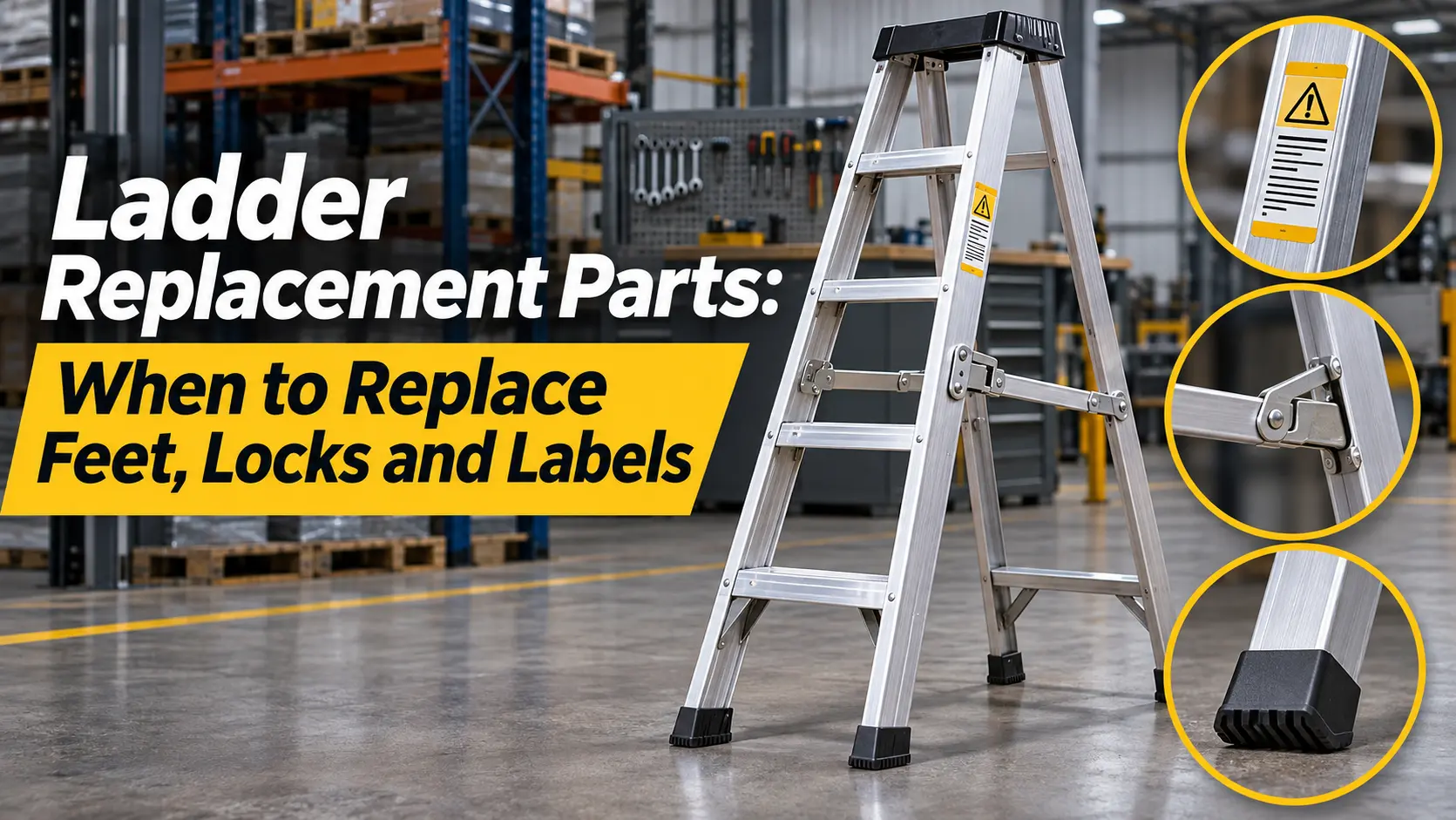
| Feet or end caps | Affect contact with the supporting surface | Missing, worn, loose, damaged or contaminated part |
| Locks, catches and hinges | Control approved extension or configuration | Does not engage, is bent, damaged, loose or operates abnormally |
| Labels | Identify the product and communicate warnings | Missing, unreadable, incorrect or detached label |
| Rope and pulley parts | Support extension-ladder operation | Fraying, damage, binding, contamination or missing component |
| Rungs, rails and fasteners | Form the ladder structure | Crack, bend, looseness, corrosion or suspected impact damage |
The table is not a substitute for an inspection manual. A part may look minor while its function is critical. If its condition or compatibility is uncertain, quarantine the ladder rather than continuing use.
Before requesting a replacement foot, lock, label, rope or end cap, collect the ladder’s model reference, product type, material, approximate purchase record, asset ID and clear photos of the affected area. Include photos of the full ladder, relevant label and attachment location. This helps distinguish a similar-looking product from the exact version in service.
Do not match a part only by size or appearance. Rail profiles, attachment methods, locking systems and instruction versions can vary between models. A component from another ladder, an aftermarket item or a modified substitute may not be confirmed for the product. The safe commercial question is whether the supplier can discuss a confirmed path for the identified ladder—not whether a part can be made to fit.
Remove the ladder from available stock if a safety-related part is missing, loose, damaged, contaminated or operating abnormally. Stop use when a lock does not engage as instructed, a foot is absent, a rope or pulley is damaged, labels needed to identify the product are unreadable, or any structural element is bent, cracked or loose.
Use a visible quarantine tag and keep the ladder in an area where it cannot be issued accidentally. Record the asset ID, date, defect description, reporter, images where useful and the next action. Do not allow an urgent rental or maintenance job to override the condition decision.
Fleet teams often want to restore equipment quickly. That is understandable, but it increases the importance of a controlled route. Use original or supplier-confirmed compatible parts only where the manufacturer’s information and the responsible process support that action. Follow approved instructions for any replacement work. Do not drill rails, alter locking components, substitute fasteners, paint over labels or interchange parts between models without confirmation.
Some damage is not a parts issue. A bent rail, cracked rung, distorted hinge or unclear product identity may require the ladder to remain out of service rather than being returned after a simple component change. The inspection record should make that distinction visible.
Labels can show model identity, warnings, configuration information or traceability data. Treat an unreadable or missing label as an information-control issue, especially for telescopic and multi-purpose ladders with model-specific lock or configuration instructions.
Before arranging a replacement label, verify the exact product and current artwork. An old label or a label borrowed from another size may create a new problem. Keep the approved label reference, placement photo and version record with the asset file. Fine Ladder’s FAQs can support general product discussions, but the exact model documentation should guide the final decision.
For rental fleets, parts control begins at return inspection. Check feet, locks, hinges, labels, ropes, pulleys and accessories before the ladder returns to available inventory. Separate clean, inspected stock from returns, quarantined units and equipment awaiting a confirmed decision.
A useful record includes product ID, defect, inspection type, image reference, part request date, response received, action authorized, person completing the action and return-to-service decision. Reviewing these records can reveal recurring transport damage, missing feet on a particular route or labels wearing early in a certain environment.
Send the model reference, product type, asset identifier, clear part and full-product photos, target market, requested quantity and a concise description of the defect. State whether the ladder is quarantined and whether any manual or label is available. Do not send only a generic request for “ladder spare parts.”
Fine Ladder’s accessories page can begin an accessories discussion. Contact Fine Ladder with the product model, part photos, target market and quantity through the contact page to confirm an appropriate support path.
Replacement parts support safe fleet management only when they are identified, confirmed and handled through the right process. Inspect feet, locks, labels, ropes and end caps routinely; quarantine uncertainty; retain records; and avoid improvised repairs. A model-specific inquiry gives the supplier and buyer the best basis for deciding what can be discussed next.