For an importer, ladder safety labels and instruction manuals are part of the product—not afterthoughts added at the end of an order. They connect the physical ladder to its intended use, approved configuration, user warnings, identification and packaging information. Before a ladder is offered for sale, the importer needs to know which document and artwork versions apply to the exact model and target market.
This is a practical control guide, not legal advice. Requirements can differ among the United States, United Kingdom, Canada, Australia and European markets, and they may depend on the product, channel and local rules. Buyers should validate applicable obligations with appropriate advisers and authorities, then provide the supplier with a clear written brief.
Start with a product information pack for each ladder model or variant. It should link the model reference, photos or drawings, sample reference, label artwork, instruction manual, packaging artwork and target-market notes. A product family name is not enough: changes in height, material, locking system, platform or configuration can change what user information needs review.
| Item | What to control | Why it matters |
|---|---|---|
| Product identity | Model reference, product photo, material and intended configuration | Prevents labels or manuals being matched to a similar product |
| Labels | Artwork, position, language, warnings and traceability fields | Keeps the physical item and approved information aligned |
| Manual | Product identity, use instructions, inspection, storage and warnings | Supports users with model-specific information |
| Packaging | Carton marks, barcode, handling information and leaflet placement | Maintains information through the distribution route |
| Approval record | Revision number, approval date and responsible contact | Creates a reference for production and incoming checks |
Use a simple, unique revision code on every approved file. Record the file name, date, owner and reason for each change. This makes it possible to tell whether a carton, label or manual is current without relying on memory or an email thread.
Labels may communicate product identity, warnings, configuration instructions, care information, traceability fields or other target-market content. Do not decide their content by copying a competitor product or a generic template. Check the exact product and the importer’s market brief.
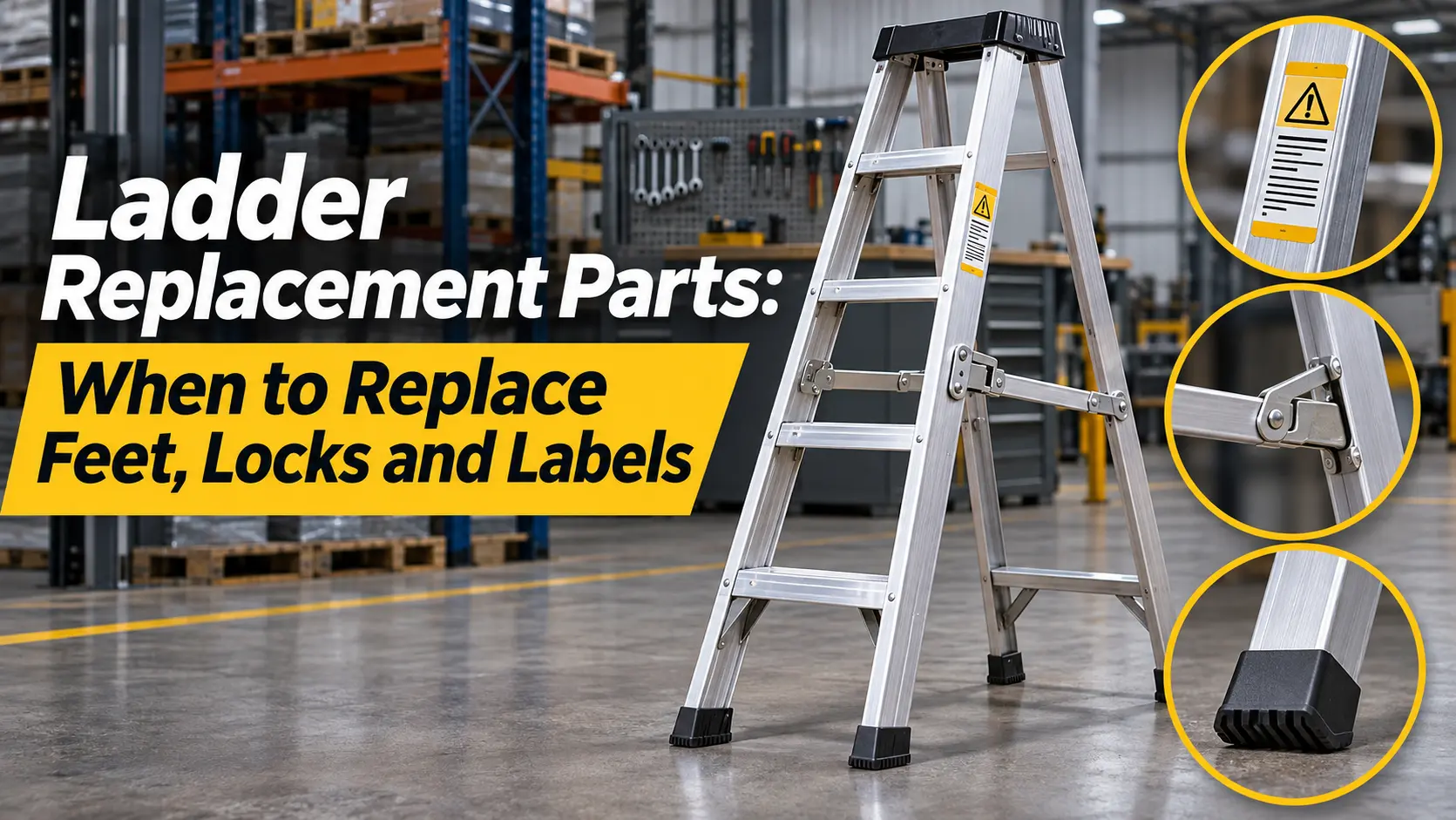
During sample approval, inspect label placement on the actual ladder. It should remain visible where the instructions require it, not be hidden by a folding section, packaging protection or a component in normal use. Review print clarity, adhesion, surface preparation and the likelihood of abrasion during normal transport and handling. Do not claim a label is durable or compliant unless the relevant evidence has been confirmed for that exact label and application.
Include labels in the incoming and pre-shipment inspection plan. A missing, incorrect, unreadable or outdated label should be treated as a product-information discrepancy, not merely a cosmetic issue. Photograph the approved sample label and store it with the current artwork file.
A ladder instruction manual should identify the product accurately and describe only the configurations, components and procedures applicable to that model. Manuals are especially important where ladders extend, fold, articulate, use locks, include platforms or require particular storage and inspection steps.
Check the manual against the physical sample line by line. Confirm the product image, model reference, part names, setup sequence, warnings, inspection guidance, storage content and contact information. If a manual covers several variants, make sure it clearly distinguishes them. Do not reuse a manual from a similar-looking ladder simply because the product category is the same.
Language should follow the target-market brief. Agree who provides translation, who reviews it, which version is approved and how the language version is identified. A translated manual should still be checked against the source and the actual product; translation does not correct an inaccurate configuration diagram.
Approve the physical sample and information pack together whenever possible. A sample sign-off should state what is approved, what remains pending and which files are the applicable versions. Attach photos that show label locations, packaging presentation, manual cover and the model identity.
Where branded packaging or manuals are not ready for the first functional sample, record that clearly. Use a separate artwork approval before production. The goal is to avoid a false assumption that the buyer has approved information that was never present on the sample.
For a private-label project, keep product approval, branding approval and packaging approval as separate but connected records. One person should be authorized to approve changes; otherwise, conflicting email approvals can reach production.
The outer carton and any leaflet must make sense for the distribution route. Review product name, model reference, handling marks, barcode fields, packaging count, destination-market language and leaflets. Check whether a leaflet can become detached, whether carton artwork remains legible after warehouse handling and whether the right manual reaches the right product.
Packaging information must not introduce unconfirmed claims. Avoid printing a standard, performance, load, origin or certification statement unless it has been verified for the exact product and market. Similarly, do not use broad claims such as “universal,” “safest” or “approved everywhere.”
Fine Ladder’s downloads and FAQs can support a preliminary documentation conversation. The actual sale pack should always be based on the current documents confirmed for the model and market.
Target-market review should start before labels and cartons are printed. The buyer should provide the sale countries, user type, retail channel, language needs, product claims proposed by marketing and any retailer information requirements. Review the complete pack against that brief: label, manual, carton, product image, barcode and other supplied material.
Keep a list of questions that need external confirmation. Examples can include local language expectations, mandatory warnings, traceability format, recycling marks, retailer portal requirements and product documentation. This keeps legal or regulatory uncertainty visible instead of allowing it to be hidden in artwork revisions.
Do not treat a document accepted for one market as automatic approval for another. A regional launch may require separate controlled versions even where the physical ladder is identical.
Changes may affect a label material, logo, product photo, supplier address, manual diagram, carton layout or sales market. Any one of these can make a previously approved file obsolete. Use a change-control log showing the requested change, reason, affected SKUs, affected documents, current and new revisions, approval owner and effective date.
Assess whether the change requires a revised sample, new photos, translation review, packaging review or extra inspection. Remove superseded files from the working pack so production and inspection teams cannot select them by mistake. At pre-shipment inspection, compare the finished product and packing against the current approved pack—not against an old sample or a draft PDF.
Send Fine Ladder the market, product category, language and brand requirements through the contact page. A controlled briefing process makes it easier to prepare the right product-information discussion before production planning starts.
Importers should treat ladder labels, manuals and packaging as one controlled product-information system. Match every file to the exact model, approve samples and artwork using traceable revisions, review market needs before release and record every change. That process does not replace legal advice, but it gives the buyer and supplier a clearer basis for responsible product preparation.