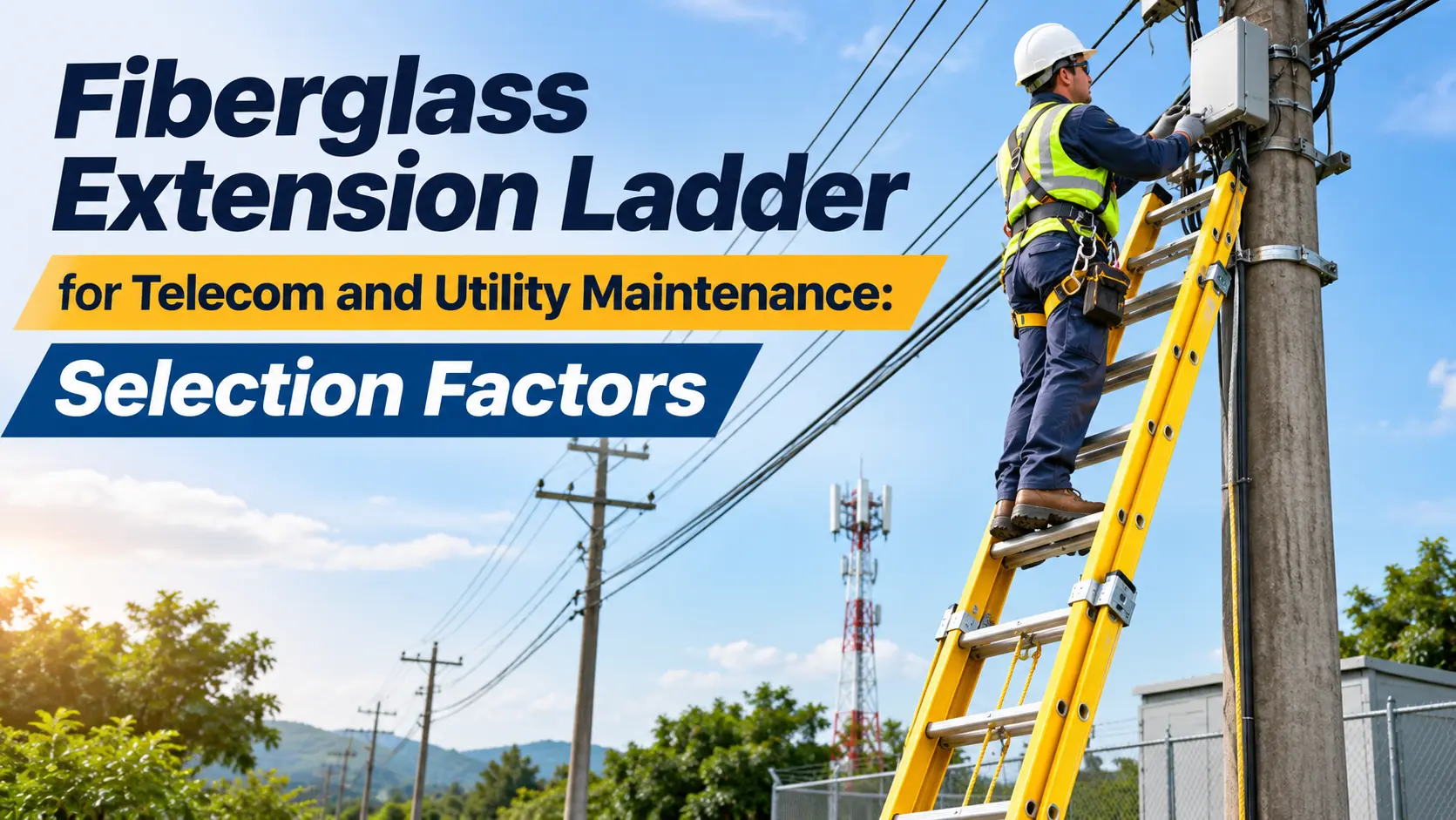
# Fiberglass Extension Ladder for Telecom and Utility Maintenance: Selection Factors
A fiberglass extension ladder can be considered for telecom and utility maintenance when a project needs adjustable access, a manageable transport profile and a material choice suited to the work environment. The selection should not begin with a broad claim about fiberglass. It should begin with the contact height, job plan, transport route, environmental conditions, product condition and destination-market requirements.
Fiberglass rails are often selected where there is potential electrical exposure, but they are not a universal electrical safety guarantee. Moisture, contamination, damage, metal components, work practices and local rules still matter. This guide focuses on procurement and task planning; it does not replace an electrical safety program, manufacturer instructions, a site assessment or competent supervision.
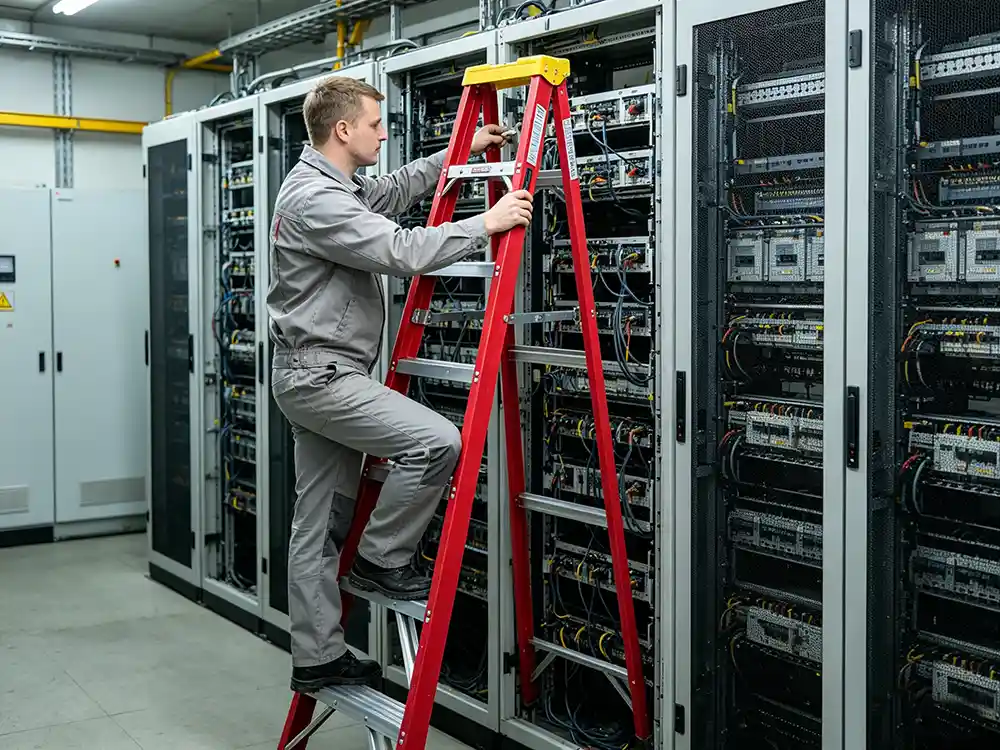
Start with the actual contact point, not simply a desired ladder length. Telecom and utility work may involve poles, building exteriors, cabinets, rooftop routes, lighting, cable paths or equipment rooms. Record the required access height, upper contact conditions, ground surface, user position, tools, duration and whether the task requires repeated moves.
Separate nominal ladder length, extended length, closed length and practical working position. These are different selection measures. A ladder that reaches the intended contact point may be unsuitable if it cannot be transported in the available vehicle, carried safely through the site or set up in the required space. Likewise, a compact closed length does not decide whether the extended configuration suits the job.
For a service fleet, closed length is a planning issue. Measure vehicle racks, interior storage bays, doors, depot routes and the path from the vehicle to the task. Consider how crews load, unload and carry the product around parked vehicles, restricted sites, vegetation, corridors or uneven ground.
Ask for model-specific closed dimensions, handling information, current instructions and packaging details. Protect rails, feet, locks, rope and pulley components from loose tools, vibration and repeated abrasion. Do not use a ladder as a cargo restraint or assume any rack arrangement suits every product. Fine Ladder’s extension ladder range provides a category starting point for an exact-model discussion.
The work environment may include energized equipment, overhead services, wet ground, metal structures, traffic, weather, contaminants, restricted access or public areas. A material choice is only one control among many. Identify hazards before moving or raising the ladder, then follow the work plan, clearance requirements and local procedures.
Fiberglass rails should be clean, dry and intact for the intended work. Treat dirt, moisture, metal dust, chemical residue, exposed fibres, cracking, deep damage or burns as reasons to stop and evaluate the ladder. Metal hardware, rungs, locks, fasteners and accessories can still be present. Do not describe any ladder as electrically invisible, shock-proof or suitable for every electrical environment.
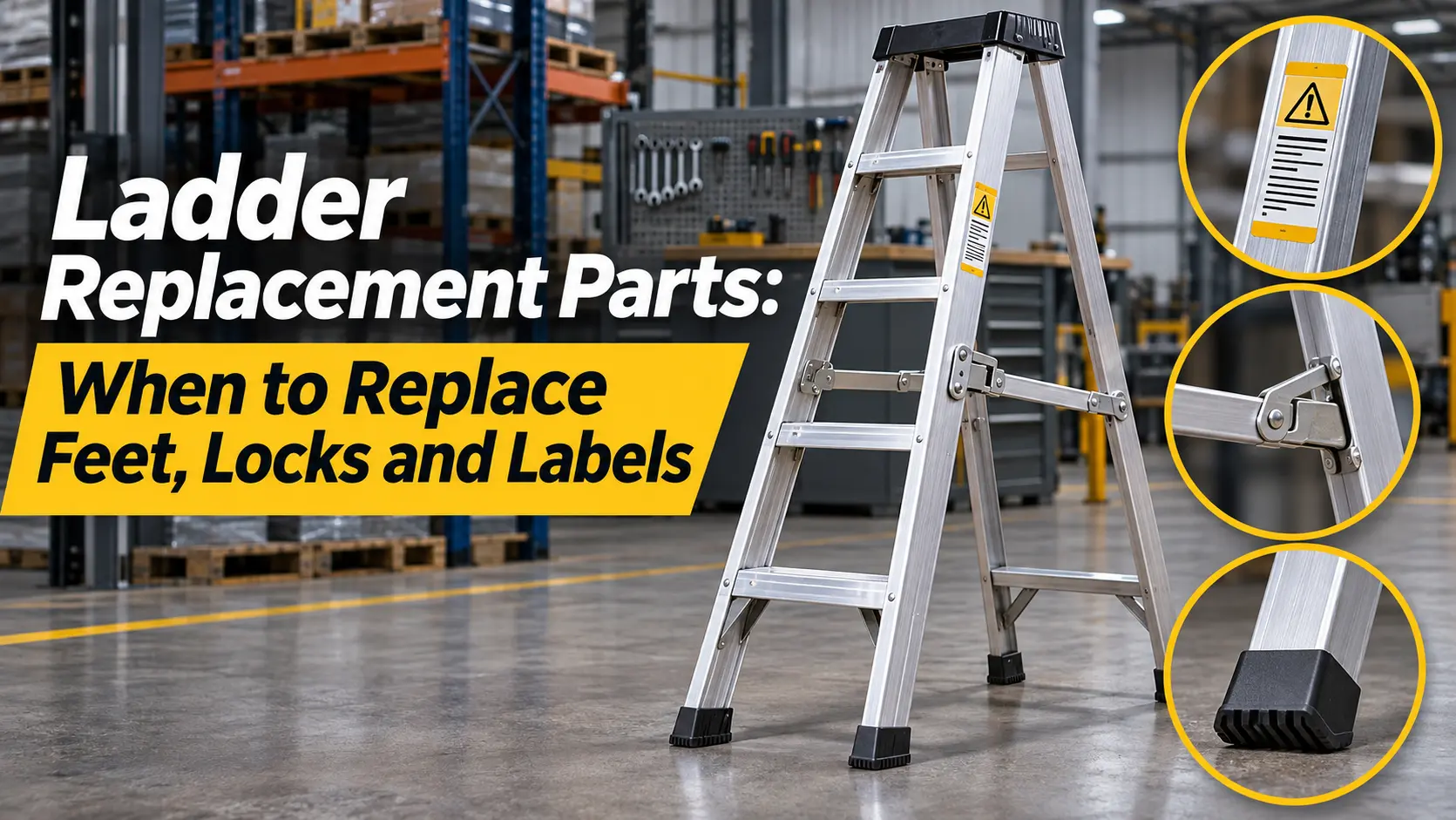
Inspect the complete ladder before use and after a vehicle incident, drop or reported malfunction. Check rails for cracks, splits, exposed fibres, burns, corrosion, contamination or distortion. Check rungs, feet, end caps, locks, guides, rope, pulley and fasteners. Confirm labels and instructions are readable and the product identity can be verified.
Operate extension components only as the manufacturer instructs. Rung locks should engage normally; ropes and pulleys should not bind, fray or show damage. If any part is uncertain, quarantine the ladder rather than issuing it for a time-critical repair. The cost of a delayed task does not make an uncertain access product acceptable.
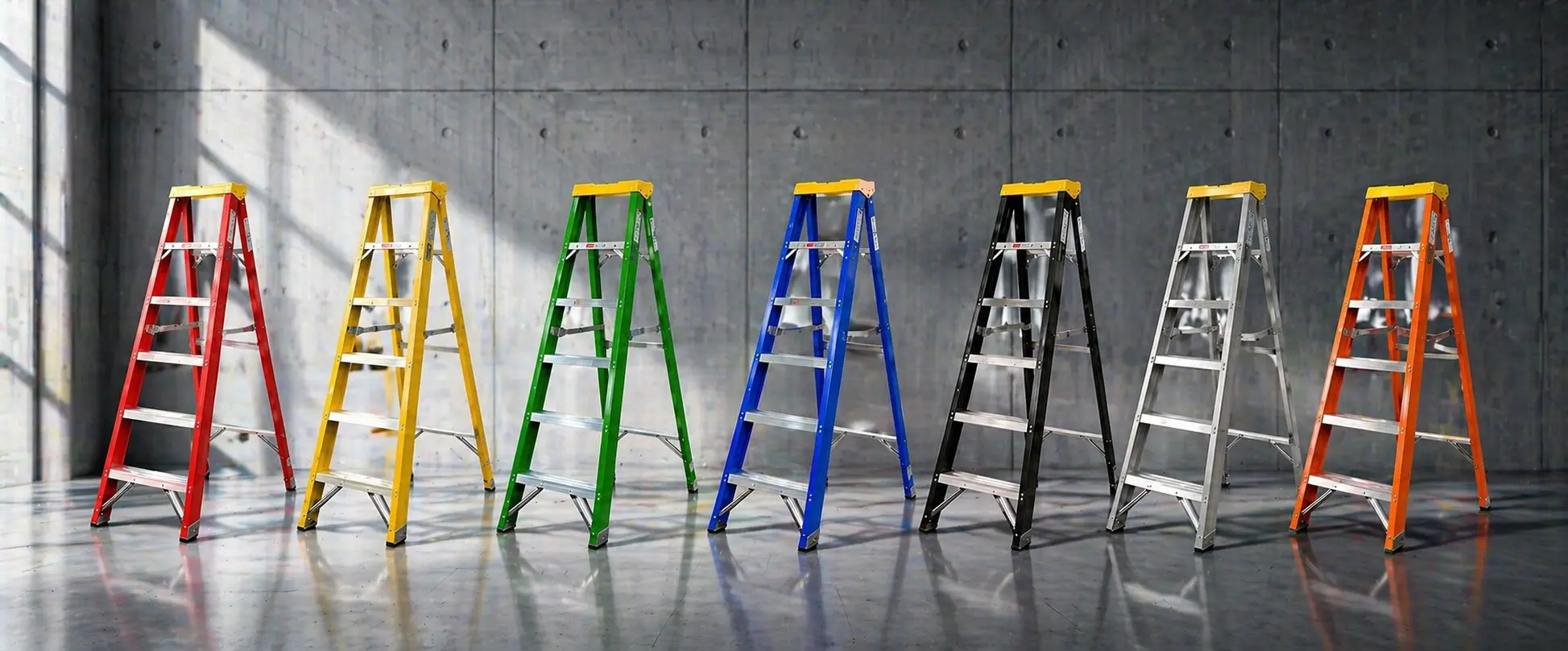
Distributors may need both fiberglass and aluminum extension-ladder options because customer tasks, handling preferences and work environments differ. Aluminum can be a practical option for general non-electrical access work. Fiberglass can be considered where a customer’s task and procedures call for that material. Neither choice removes the need to inspect the product, plan the task and follow local controls.
Avoid a one-material-for-everyone stock plan. Group demand by sector, work environment, height range, vehicle limitation and documentation need. Telecom contractors may value closed length and repeatable inspection points; utility buyers may require detailed product information for their own approval process; industrial maintenance teams may prioritize fleet identification and storage procedures.
Before purchasing, request the exact product reference, drawings, dimensions, rail material information, labels, instructions, inspection points, packaging data and target-market documentation. Review a physical sample in the same way crews will use it: receive it, transport it, inspect it, extend it as instructed, close it and return it to storage.
Record the sample version and any outstanding questions. Do not use general category copy as proof of a feature, certification, rating or market suitability. Fine Ladder’s telecoms and utilities page can support a sector discussion, while the final buying decision should use the approved model information.
1. What contact height, closed length and transport route are required?
2. What ground, weather, traffic and environmental hazards are present?
3. What product labels, manuals and target-market information does the customer require?
4. How will crews inspect rails, locks, rope, pulley and feet before issue?
5. Where will ladders be stored, cleaned and quarantined if damaged?
6. Does the task require a ladder, or another access method because of duration, force or work area?
Invite Fine Ladder to discuss the industry, contact height, fleet limitations, target market and documentation needs through the contact page. A complete job brief produces a more useful ladder comparison than a request based on material alone.
Selecting a fiberglass extension ladder for telecom or utility maintenance is a combined access, transport and condition-management decision. Match height and closed length to the actual task, inspect the complete product, keep fiberglass rails clean and intact, and follow the local work plan. Material matters, but it is never a substitute for controlled setup, informed users and current product documentation.