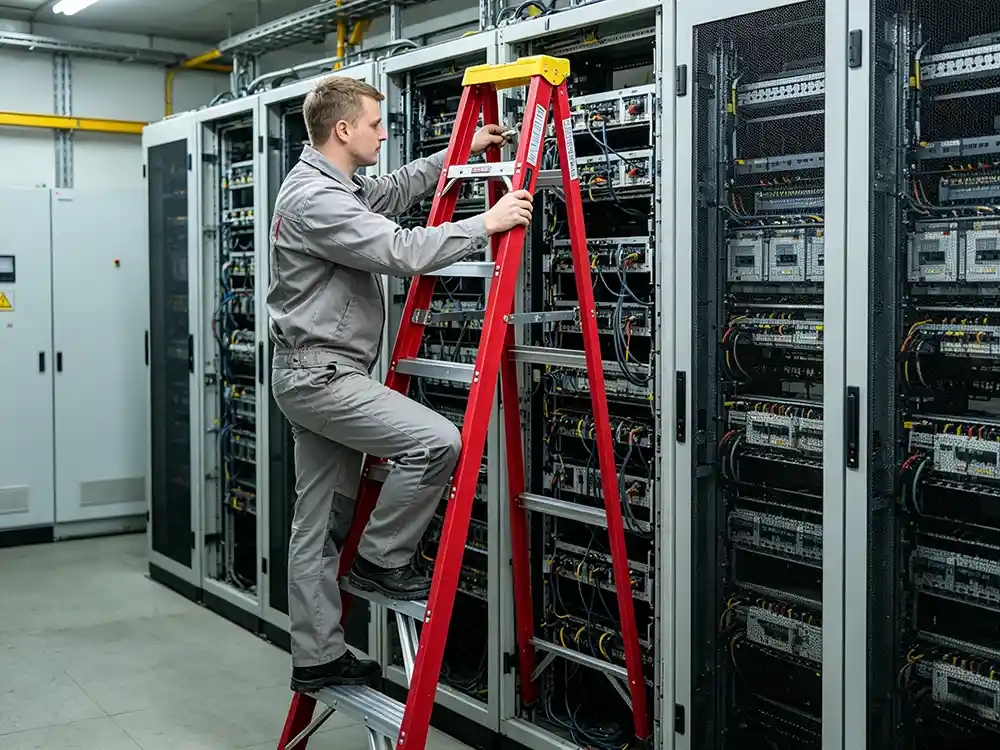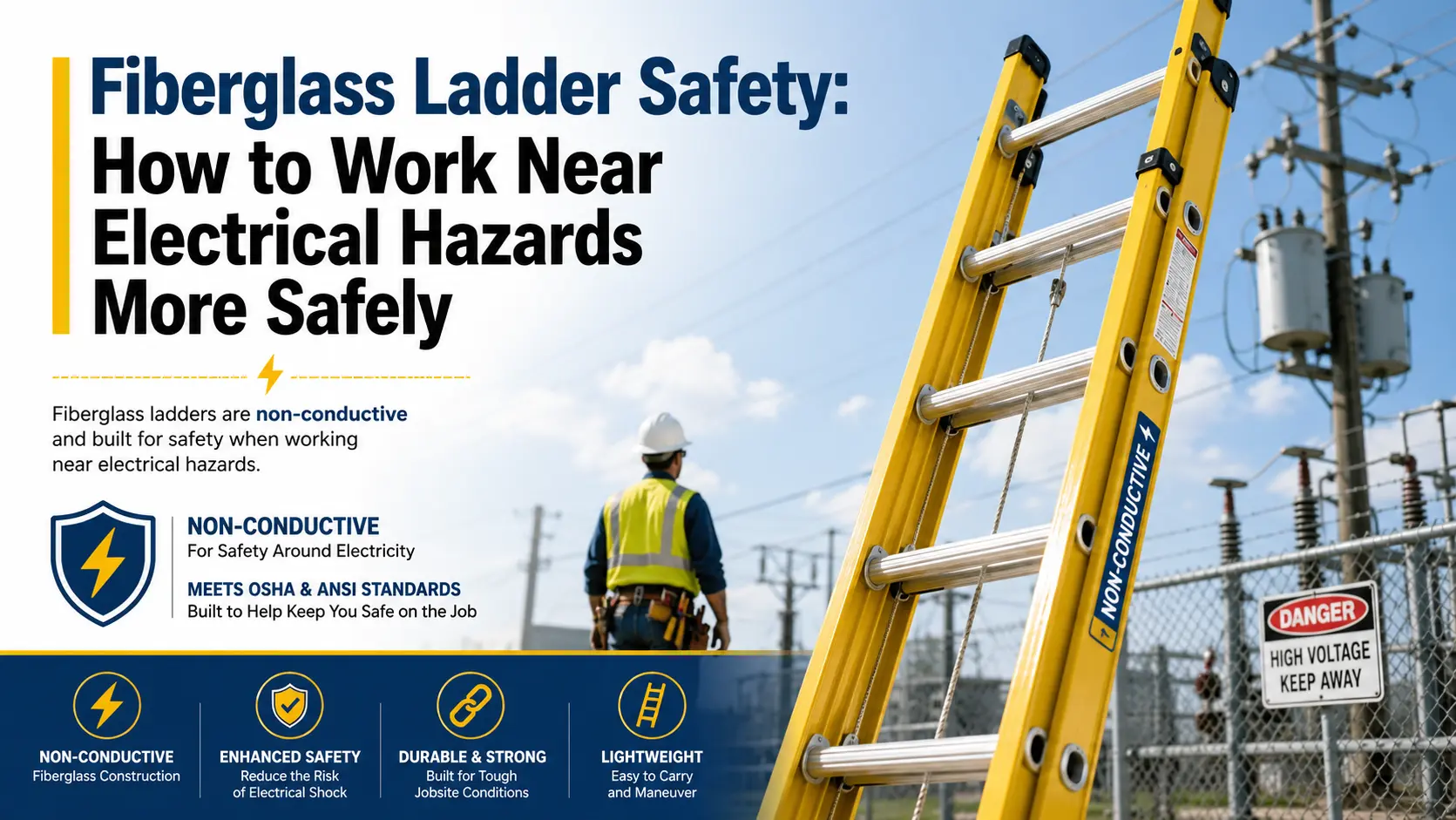
For electricians, utility crews, facility maintenance teams, and industrial technicians, ladder choice is not just a matter of convenience. When work happens near energized panels, overhead lines, lighting systems, switchgear, or electrical rooms, the wrong ladder material can turn a routine task into a serious electrical hazard. That is why many professionals choose a fiberglass ladder for electrical work.
A fiberglass ladder is commonly preferred around electrical hazards because fiberglass side rails are non-conductive when clean, dry, intact, and properly maintained. However, "non-conductive" does not mean "risk-free." A fiberglass ladder can reduce one pathway for electrical current, but it cannot make unsafe work safe by itself.
This guide explains when a fiberglass ladder is the right choice, what it can and cannot do, and how to use it as part of a safer electrical work process.
A fiberglass ladder is a portable ladder built with fiberglass-reinforced side rails instead of aluminum side rails. Many fiberglass ladders still include metal hardware, rungs, hinges, spreaders, locks, shoes, or fasteners, so the entire ladder should never be treated as electrically invisible.
In professional access equipment, fiberglass is used because it offers a practical balance of:
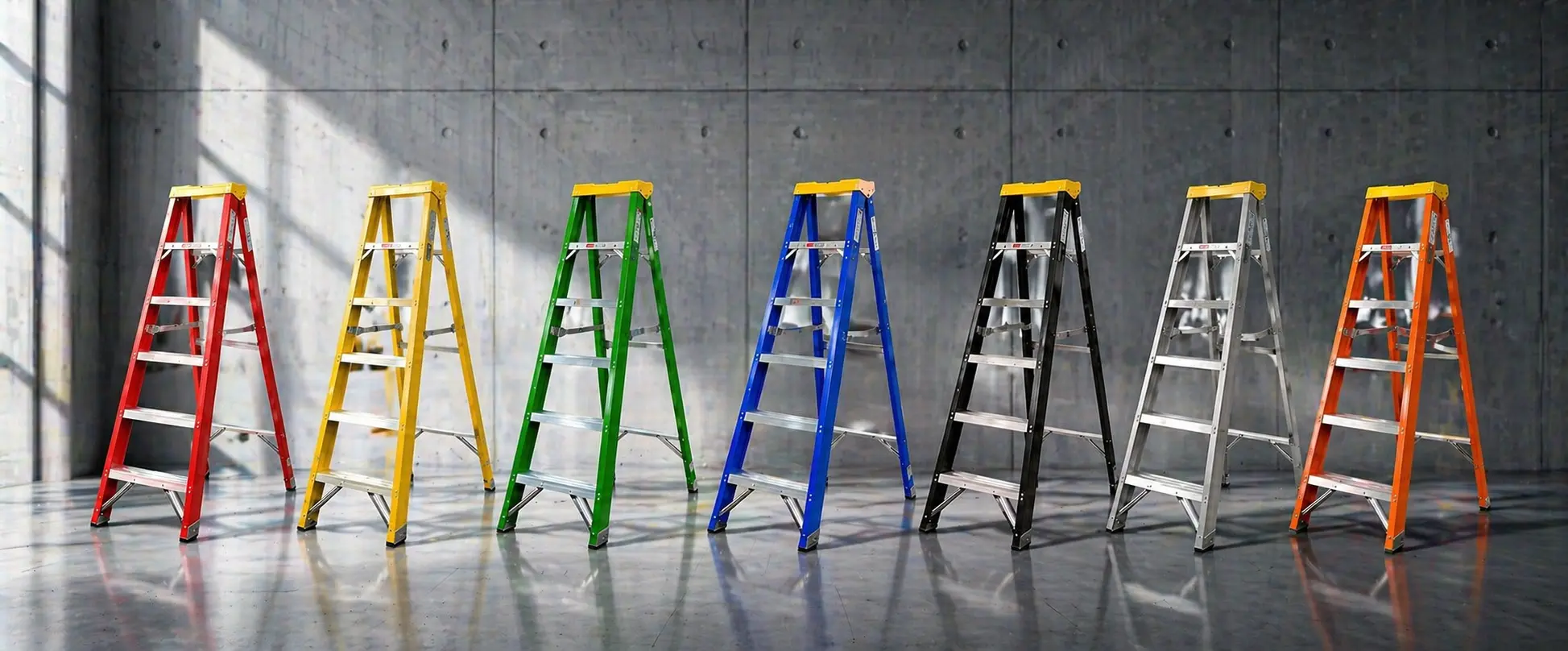
Fine Ladder, for example, manufactures access equipment for construction, utilities, trades, industrial work, facilities management, and other sectors. Its product range includes step ladders, extension ladders, telescopic ladders, towers, podiums, multipurpose ladders, and fiberglass options for professional use.
The main reason is simple: aluminum conducts electricity. If an aluminum ladder contacts an energized conductor, the ladder can become part of the electrical path. Anyone holding, climbing, or stabilizing the ladder may be exposed to severe shock or electrocution.
Fiberglass side rails are designed to reduce that risk. This makes a fiberglass ladder a better choice when the ladder or worker could be near:
OSHA and NIOSH safety resources consistently emphasize avoiding electrical hazards before handling a ladder and using non-conductive ladders where a ladder could contact exposed energized electrical equipment. In practical terms, that usually means choosing fiberglass or another suitable non-conductive material instead of aluminum.
Yes. A fiberglass ladder reduces electrical conductivity through the side rails, but it does not eliminate every shock path.
You can still be exposed to electrical hazards if:
The safest mindset is this: a fiberglass ladder is a protective choice, not a permit to work carelessly near electricity.
For general warehouse, painting, or low-risk access work, aluminum ladders are popular because they are lightweight and easy to move. But around electrical hazards, aluminum is usually the wrong material.
Best for:
Advantages:
Limitations:
Best for:
Advantages:
Limitations:
If there is any realistic chance of contact with energized electrical equipment, choose a fiberglass ladder and apply all required electrical safety controls.
Use a fiberglass ladder when the work area includes possible electrical exposure, even if the task itself is not directly electrical.
Common examples include:
If the jobsite has uncertain electrical conditions, treat the area as potentially hazardous until a qualified person confirms otherwise.
Before each use, inspect the ladder carefully. A fiberglass ladder is only useful as a safety control if it is in good condition.
Look for:
If the fiberglass rails are damaged, remove the ladder from service.
Fiberglass can lose practical safety value if the surface is covered with conductive contamination.
Watch for:
Clean and dry the ladder according to the manufacturer's instructions before use.
Even when the rails are fiberglass, many ladder parts may be metal.
Inspect:
Do not let metal parts contact energized equipment.
Choose a ladder rated for the worker, tools, PPE, and materials. Do not exceed the ladder's load rating.
For electrical technicians, remember that tool belts, meters, cable, drills, safety gear, and carried parts all add weight.
Labels should be legible and intact. They may show:
If labels are missing or unreadable, the ladder may not be suitable for controlled professional use.
Choosing the right ladder is only step one. Setup matters just as much.
Before moving or raising the ladder, scan the area for:
Never carry or raise a ladder without checking above and around the work path.
Do not position the ladder where it, your body, your tools, or carried materials could enter a dangerous distance from energized parts. Required approach distances vary by voltage, country, industry, and job type, so follow your local regulations and company electrical safety procedures.
If you cannot maintain the required distance, stop and escalate the task.
The safest electrical work is planned work. Whenever possible:
A fiberglass ladder should not be used as a substitute for de-energizing equipment.
Place the ladder on a firm, level surface. Avoid:
If the ladder moves, the worker may instinctively grab nearby equipment, creating a secondary electrical hazard.
Keep two hands and one foot, or two feet and one hand, on the ladder while climbing. Carry tools in a tool belt, hoist line, or approved pouch rather than in your hands.
Overreaching is dangerous around electricity because it can pull your body or tools toward energized parts. Keep your belt buckle between the side rails and reposition the ladder when needed.
Even experienced technicians can become too comfortable with routine work. Avoid these mistakes:
Most ladder incidents come from a chain of small errors. Break the chain early.
The best fiberglass ladder depends on the work environment.
Use for indoor maintenance, panel-area work, lighting replacement, and short-duration tasks where the ladder can stand independently.
Look for:
Use for access to roofs, poles, building exteriors, or elevated equipment. Extension ladders require careful angle setup and top support.
Look for:
Use where a worker needs a more stable standing position for longer tasks. Platform ladders can improve comfort and reduce overreaching when selected correctly.
Use where portability matters, but only if the ladder is designed and rated for professional use. Confirm locking mechanisms are secure and inspect all sections before climbing.
Routine care helps preserve the ladder's safety performance.
For fleet users, keep inspection records and assign responsibility for periodic checks.
For electrical work, yes. A fiberglass ladder usually costs more than an aluminum ladder, but the safety value is significant when workers operate near electrical hazards.
The better question is not "Is fiberglass more expensive?" It is "What is the cost of using the wrong ladder near electricity?"
For electrical maintenance teams, utilities, telecoms, and industrial facilities, fiberglass ladders should be part of a broader safety system that includes training, inspection, job planning, PPE, and lockout/tagout procedures.
When selecting a supplier, look beyond price. Professional buyers should evaluate:
Fine Ladder manufactures access equipment for professional and industrial users, including ladders for construction, utilities, facilities management, trades, and related sectors. If your team needs fiberglass ladders for electrical maintenance or utility work, choosing the right model starts with the work environment, required height, duty rating, and electrical hazard profile.
A fiberglass ladder is one of the safest ladder material choices for work near electrical hazards, but it is not a standalone safety solution. Use fiberglass instead of aluminum where electrical contact is possible, inspect the ladder before every use, keep it clean and dry, maintain safe distances, and de-energize equipment whenever possible.
For electrical maintenance teams, the right ladder can reduce risk, improve compliance, and help workers approach height tasks with more confidence. If you are choosing ladders for electrical, utility, industrial, or facilities maintenance work, review your jobsite hazards first and select a fiberglass ladder that matches the task.
To discuss suitable fiberglass ladder options for your team, contact Fine Ladder with your working height, site conditions, and intended application.
A fiberglass ladder is generally a safer choice than an aluminum ladder around electrical hazards because fiberglass side rails are non-conductive when clean, dry, and undamaged. However, workers still need safe distances, proper PPE, inspection, and de-energization procedures where required.
The fiberglass rails are designed to resist electrical conductivity, but the ladder may still have metal components. Wet, dirty, damaged, or contaminated fiberglass can also create additional risk. Always inspect the ladder before use.
Aluminum ladders should not be used where the worker or ladder could contact energized electrical equipment. For electrical maintenance, fiberglass is usually the preferred ladder material.
Inspect the side rails, rungs, locks, hinges, feet, labels, and any signs of cracking, fiber bloom, contamination, burns, or structural damage. Remove damaged ladders from service.
Only if the work can be performed outside the required approach distance and in line with local regulations and site procedures. If there is any risk of contact with overhead lines, stop and consult qualified electrical supervision or the utility provider.
For electrical environments, fiberglass is usually better because it is non-conductive compared with aluminum. For non-electrical work, aluminum may be lighter and easier to carry, but it is not appropriate near energized conductors.
Service life depends on usage, storage, exposure, maintenance, and inspection results. A ladder with cracks, exposed fibers, missing labels, damaged locks, or contaminated rails should be removed from service regardless of age.