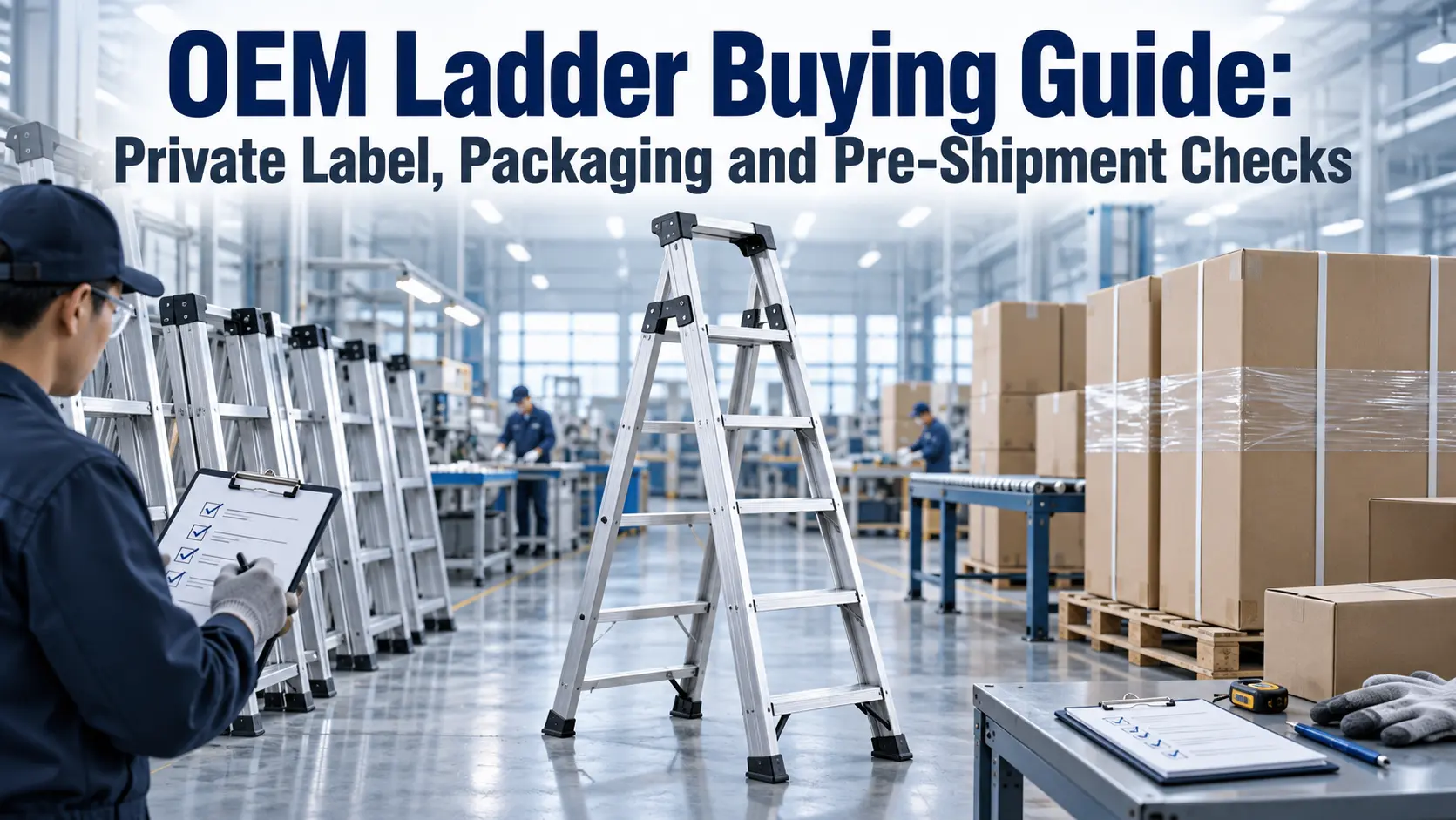
Working with an OEM ladder manufacturer is an execution process, not simply a request for a logo on an existing product. A successful private-label ladder program connects the intended application, technical specification, target-market information, sample approval, artwork, packaging, inspection and shipment plan before production is released.
For importers and brand owners, this sequence reduces avoidable surprises: a label that does not match the destination market, a carton that does not protect the product, an unapproved change made after sample sign-off, or a pre-shipment inspection that checks the wrong reference. This guide focuses on the operational workflow for OEM and ODM ladder purchasing. It does not promise minimum order quantities, pricing, delivery dates, certifications, testing or any customization capability; those matters need direct confirmation for the exact product and order.
An inquiry should begin with a specification sheet that both buyer and supplier can review. “Wholesale ladders” is not a complete description. A basic ladder can differ by product family, material, configuration, size, feet, steps, locks, labels, carton and intended use. The specification is the reference that keeps the sample, artwork and inspection aligned.
| Specification area | Information to define | Why it matters |
|---|---|---|
| Product type | Step, extension, telescopic, multi-purpose, fruit ladder, tower or other category | Prevents a product family being assumed from a general name |
| Intended application | Trade, facilities, retail, industrial, household, orchard or other stated use | Guides product selection and user information |
| Product details | Required size range, material, configuration, components and finish | Creates a shared comparison point for samples and production |
| Target market | Countries or regions of sale and any retailer requirements | Determines what labels, instructions and documentation must be reviewed |
| Brand presentation | Brand name, logo files, colour references, artwork ownership and approval contact | Controls private-label ladders and prevents outdated artwork |
| Packaging | Carton concept, unit protection, marks, barcode needs, pallet and container expectations | Links product condition to distribution reality |
| Quality plan | Sample reference, inspection points, accepted change process and document versions | Gives the final check a clear basis |
Fine Ladder’s product range can help buyers identify product categories, but the procurement document should name the exact reference product or required design. Avoid copying claims from a general website page into private-label artwork until they are confirmed for the selected model and market.
Target-market information must enter the project early, not after cartons are printed. The buyer should provide the planned markets, sales channel, expected user type, language needs and any retailer or importer documentation requirements. The supplier can then identify the information needed for discussion, while the buyer remains responsible for confirming applicable legal, product-safety and commercial requirements with the appropriate experts.
Review product labels, warning content, instruction manuals, packaging marks, traceability information and any claims proposed for the product. Do not assume a document acceptable in one market is suitable everywhere. Do not state that a ladder meets a named standard or certification unless the exact model and market evidence have been verified.
Create an artwork register with a unique file name, revision number, approval date and approving contact. The same discipline should apply to manuals, carton artwork and labels. A PDF that is “almost final” should not be treated as production authority.
A sample is useful only if the buyer records what was reviewed. Ask for photos, measurements and functional observations alongside the physical sample. Compare the sample against the specification rather than relying on memory or a marketing image.
For a ladder sample, review product identity, material, finish, components, steps, feet, locks, rails, labels, instructions and the supplied packaging. Operate movable components according to the current product manual. Confirm that the intended brand artwork is represented correctly, or clearly identify it as pending if a generic sample is being used.
The sign-off should state whether the sample is approved, approved with listed changes, or not approved. It should also identify the exact sample version, photo set, packaging version and document version. Once the order moves forward, this approval pack becomes the comparison point for pre-shipment inspection.
Private label does not mean decoration alone. Colour, logo placement, label material, label location, warning language and instruction content can affect market presentation and user information. Send editable logo assets and approved colour references where available. Specify whether artwork must be printed, engraved, applied as a label or handled in another agreed way; never assume a branding method is included without confirmation.
Ask who owns each artwork file, who has authority to approve revisions, and how artwork will be checked on the production sample or first finished unit. Check readability after normal handling, not only on a digital proof. Labels should not be hidden by packaging, obscured by components or placed where routine use quickly wears them away.
Instructions require the same attention. They should identify the product accurately, reflect its actual configuration and include the target-market information the buyer has confirmed is needed. An instruction manual from a similar ladder cannot automatically be reused for a different height, configuration or locking arrangement.
Ladder packaging must protect long rails, steps, feet, locks and branded surfaces from the factory through container loading, inland transport, retail handling and final delivery. A good packaging discussion starts with the actual route: direct container shipment, distributor warehouse, retail distribution centre, parcel delivery or mixed handling.
Write a simple packaging plan before approving the final carton. It can include unit protection, protective materials at vulnerable points, carton orientation, shipping marks, barcode placement, pallet pattern, corner protection and loading method. Test whether components move within the carton, whether labels rub on adjacent units and whether the carton remains identifiable after normal handling.
If a retailer requires a particular drop, compression or other test protocol, provide it at the start and agree who will arrange it. Do not claim any packaging test has been passed unless it has been completed and documented for the agreed packaging configuration.
Container loading is where packaging design becomes physical. Confirm carton dimensions, unit count per carton where applicable, pallet or floor-load method, carton orientation, loading sequence, container protection and shipping marks. These details affect cube use, unloading, damage risk and the ability to trace a carton later.
Ask for loading photos or a loading plan where appropriate. Check that the selected packing method works with the buyer’s receiving equipment and warehouse process. If ladders will be stored vertically, racked or broken down into smaller distribution orders, include that in the packaging discussion. A carton that survives a container may still be unsuitable for a retail or parcel network.
A ladder pre shipment inspection is most useful when it compares finished goods with the approved specification, sample, artwork and packaging. It should not rely on a vague statement such as “good quality.” Define the inspection plan before production is complete, including who inspects, when they inspect, which versions they use and how discrepancies are reported.
Typical inspection points may include:
Inspection should not create unsupported performance or compliance claims. If an issue is found, record it with photos, batch or carton reference, description, agreed disposition and responsible owner. Reinspection, rework or release decisions should follow the agreed commercial process.
Many private-label problems begin with an informal change: a substitute label material, a new carton supplier, altered logo position, different component finish or revised manual. Some changes may be appropriate, but they must not enter the order without review.
Use a change request that states the requested change, reason, affected products, affected documents, artwork revision, packaging effect, approval owner and effective date. Decide whether a revised sample, photo approval or additional inspection is needed. Keep obsolete files out of the production and inspection pack.
This discipline protects both sides. The buyer knows what has changed; the ladder supplier China team has a single current reference; and the final inspection can distinguish approved variation from an unapproved substitution.
Keep a short decision log alongside the change request. It should record the question raised, the people consulted, the approved action and the files replaced. This is particularly valuable when artwork, packaging and product documents are reviewed by different teams in different time zones. Before releasing production, confirm that the current specification, sample approval, artwork register and inspection checklist all point to the same revision. A controlled file set makes it easier to identify the correct reference if a retailer, warehouse or inspector raises a question later.
An efficient inquiry gives the supplier enough context to prepare a relevant discussion without forcing assumptions. Send:
Fine Ladder’s downloads and Quality Assurance navigation page can support an initial document discussion; verify the live Quality Assurance URL from the website navigation before publication. For a targeted quotation discussion, contact Fine Ladder with the product category, size, material, target market, packaging, expected quantity and brand requirements.
The strongest OEM ladder program is a controlled sequence: define the product, identify the market information, approve a traceable sample, freeze artwork and documents, validate packaging for the real route, inspect against the approval pack and manage changes formally. Private-label ladders succeed when every version—from the product to the manual and carton—has a clear owner and approval record. To begin, use the Fine Ladder contact page to submit your product, market, packaging and branding brief for a model-specific discussion.
Include product type, intended application, required design details, target market, artwork, labels, manual requirements, packaging, sample reference and quality checkpoints.
It can help evaluate the base product, but the approval record should clearly state which branding, labels, documents or packaging elements remain pending and require separate sign-off.
Compare finished goods, labels, instructions, packaging and carton marks against the approved product, artwork, sample and document versions. Record discrepancies with evidence.
It prevents unreviewed changes to components, branding, manuals or packaging from reaching production and makes the final inspection meaningful.
Provide product category, size, material, configuration, target market, brand requirements, packaging needs, estimated quantity, sample expectations and desired quality checkpoints.