Telescopic ladder safety depends on more than a compact design. A telescoping ladder has moving sections, locking components and pinch zones that require a deliberate check before every use. A sound safety process covers the ladder’s condition, the locking sequence, the work area, retraction and the way the ladder travels and is stored.
This checklist is for professional users and the businesses that supply them. It does not replace the exact manufacturer instructions, workplace risk assessment, training or local rules. Lock layouts, indicators, approved extension sequences and maintenance requirements differ between models. Use the product label and manual as the controlling source whenever they are more specific.
The useful question is not whether every telescopic ladder is inherently safe. A telescoping ladder can be suitable when the correct product is selected, inspected, set up on an appropriate surface, locked as instructed and used within its intended limits. It can also be unsuitable when the task needs a different access method, when the locks or tubes are damaged, or when the operating information is missing.
For buyers, this means evaluating the full system rather than only the closed size. Fine Ladder’s telescopic ladder range shows different telescopic and multi-purpose product types. Confirm the model’s intended configuration, locking instructions, labels and destination-market information before adding claims to a catalogue or rental fleet.
Start with a clean, well-lit inspection. If the ladder has been dropped, overloaded, exposed to a corrosive environment, involved in an incident or stored where it could be damaged, inspect it more carefully before it returns to service.
Do not try to straighten a tube, defeat a lock, substitute a damaged part or make a field repair outside the manufacturer’s instructions. Isolate the ladder from use and follow the employer, rental or supplier’s inspection process.
The telescopic ladder locking mechanism is central to safe deployment. Extend it only on a stable surface and only in the sequence the manufacturer specifies. Some models lock rung by rung; others use different mechanisms or include multi-purpose hinges. A generic method is not enough.
During extension, keep hands away from the closing paths between moving tubes, rungs and locking parts. Use the designated grip points, maintain control of the ladder and keep other people clear. Stop if a section binds, a tube does not slide smoothly, a lock does not align or an indicator is unclear.
After extension, inspect every required lock—not only the highest one. Look for the model’s positive engagement indication and perform any permitted confirmation check described in the manual. Never assume a sound, partial movement or a matching height means that all locks are set. Recheck after moving the ladder into its final working position.
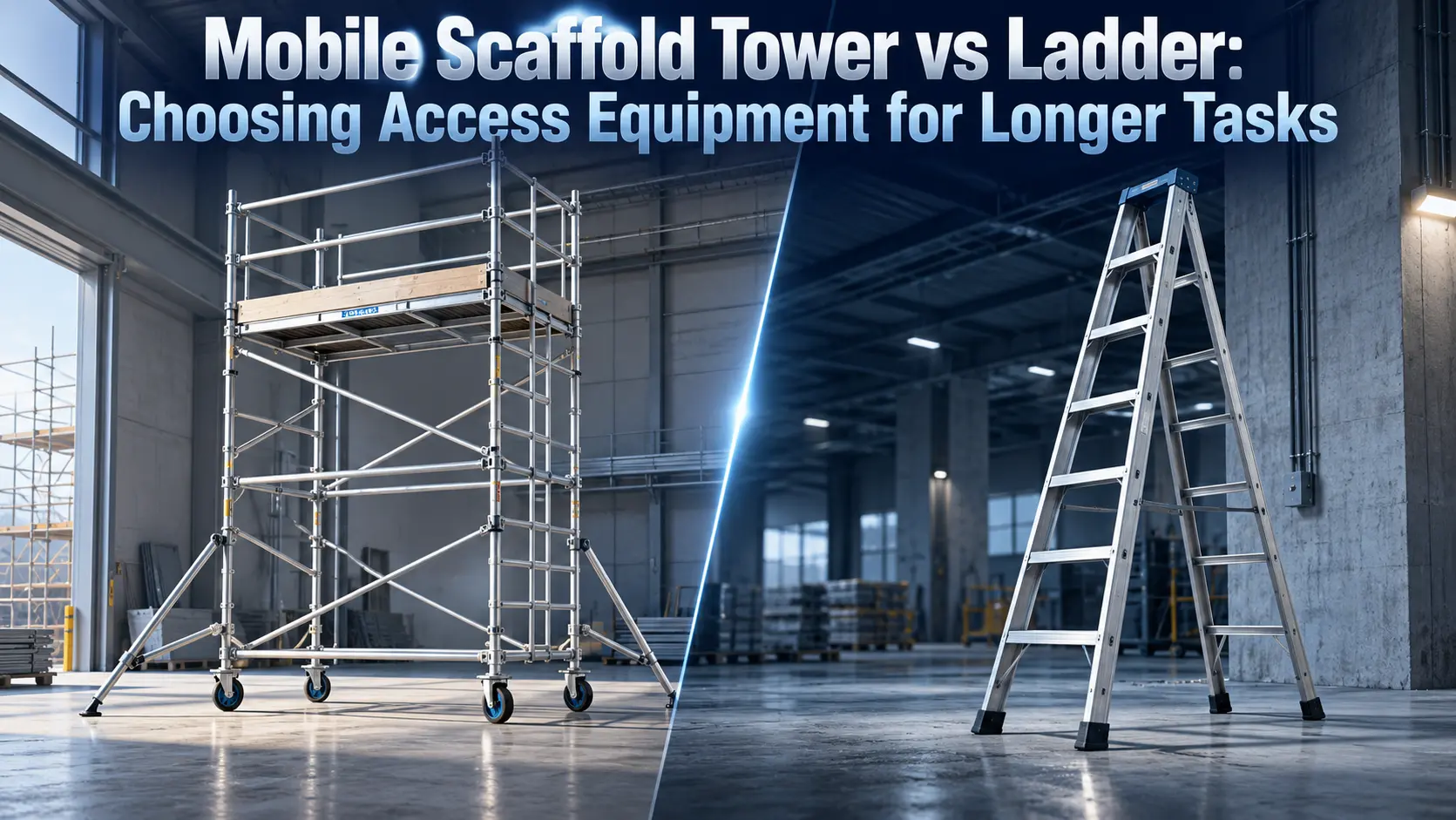
Choose the access method after considering height, task force, duration, tools, traffic, weather and nearby hazards. A collapsible ladder may be convenient to transport, but compact storage alone does not make it the right tool for every job.
For a leaning configuration, use a firm, stable base and a secure upper support suited to the specific ladder. Keep the work area clear, prevent vehicle or pedestrian impact where necessary and do not rest the ladder on fragile or movable surfaces. Requirements for angle, access above a landing and securing methods vary by location and product; follow local rules and the manual rather than using a universal figure from the internet.
Before climbing, verify the following:
Once work begins, do not treat the initial setup as permanent. Avoid overreaching, sudden side force, pushing or pulling that can change the ladder’s position. Keep the body centered between rails and descend to reposition instead of stretching to reach a distant point.
Do not attempt to adjust a telescopic section, release a lock or alter the configuration while someone is on the ladder. Keep the ladder clear of materials that could fall into locking parts. If weather changes, ground becomes wet or contaminated, the ladder shifts, or a lock looks different from its deployed condition, stop work and reassess.
For supervisors and rental operators, repeated-use jobs deserve a documented check routine. High-frequency opening and closing can expose problems that are not obvious when a product is viewed only in its closed condition.
Retraction is a distinct risk stage. Before closing, remove people, tools and materials from the ladder. Move to a clear, level area and keep bystanders away. Read the model-specific sequence again if the product has more than one release control or a controlled descent feature.
Keep hands, fingers, clothing and loose items clear of all pinch areas. Operate release controls only as instructed and keep control of moving sections throughout the process. Do not allow sections to drop uncontrolled, force a jammed tube or use a foot to hold a moving part in place.
After retraction, inspect the locks and tubes again. A section that will not close smoothly, a bent tube or a lock that stays partly engaged needs attention before the next use. No telescopic design completely removes pinch or fall risk; clear procedures and correct handling remain essential.
A well-operated ladder can still be damaged in a van, warehouse or delivery chain. Fully retract and secure it in the approved closed position before carrying or loading. Protect it from impact with heavy tools, loose cargo and sharp objects that may dent tubes or damage locks.
For storage, keep the ladder dry, clean and supported so that it cannot bend or fall. Avoid placing weight on it or using it as a shelf. Where possible, keep it away from materials that could contaminate tubes, obscure labels or affect moving parts. Before issuing a stored ladder, repeat the pre-use inspection rather than assuming that a closed product remains serviceable.
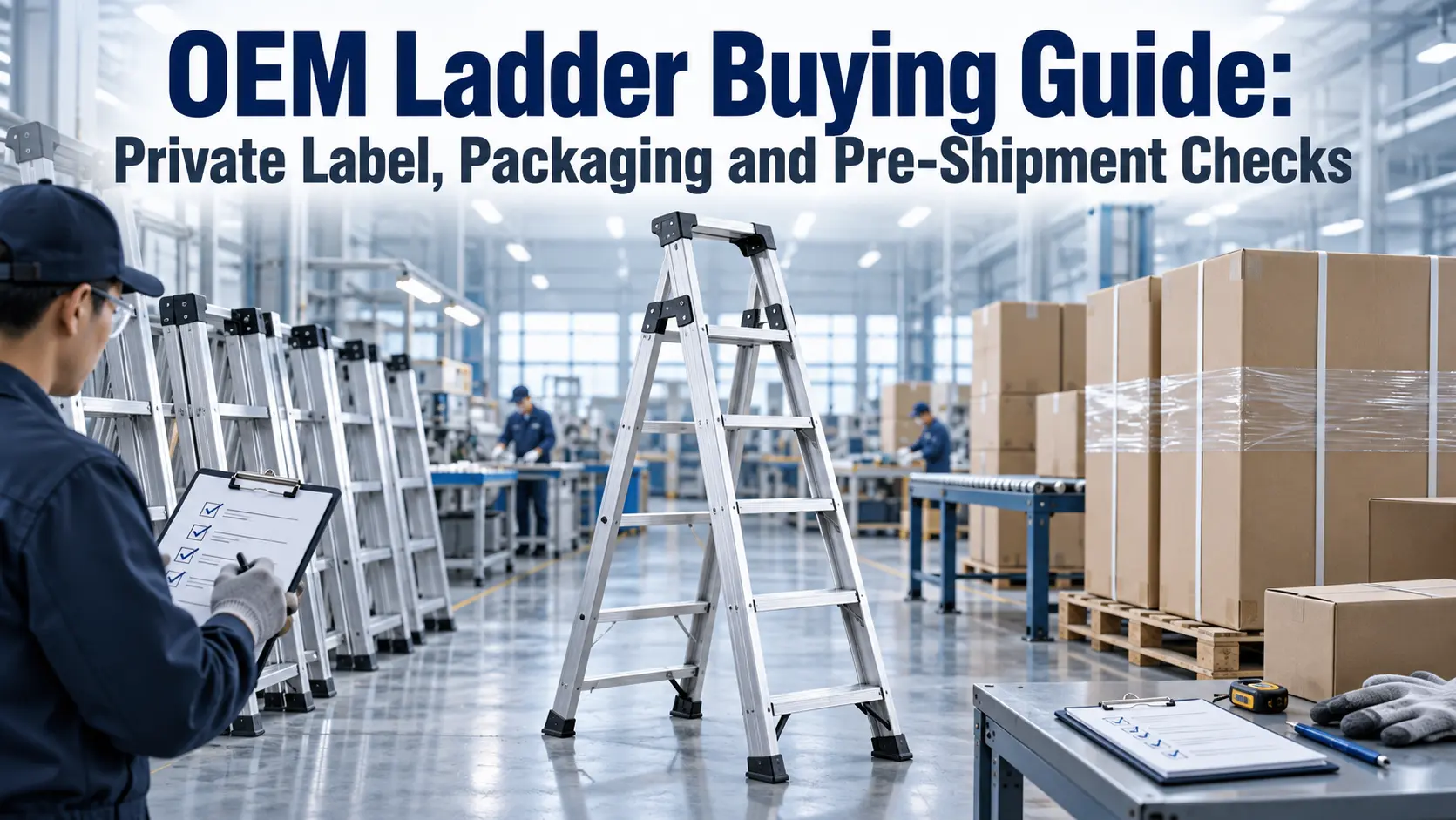
Importers and distributors should also check carton protection, internal movement, orientation marks and label durability during sample review. Ask for the current instruction manual, packaging details and product information relevant to the target market. Fine Ladder’s product videos and FAQs can support initial product discussions; model-specific documents remain the final reference.
Remove the ladder from service if any lock fails to engage, a telescoping tube is bent or damaged, a rail or rung is cracked or loose, feet are missing, movement is abnormal, labels needed for use are unreadable, or there is any doubt about the product’s condition. Stop also when the work environment or task falls outside the instructions or risk assessment.
Quarantine the ladder so it cannot be issued by mistake. Record the issue in the business’s inspection system and seek direction from the manufacturer, authorized service route or responsible safety process. Continuing because a job is urgent is not a safe basis for use.
For telescopic ladder wholesale and rental supply, user information is part of the product. During sample approval, confirm the locking sequence, lock indicators, hand-placement warnings, cleaning guidance, inspection points, retraction instructions, packaging protection and target-market labels. Review a physical sample after repeated opening and closing, then inspect it after transport simulation or normal handling.
Ask Fine Ladder to discuss the instruction manual, labels, packaging and target-market usage information needed for your intended range. A contact enquiry should include the destination market, expected user type, intended task, preferred closed length and any retailer or rental documentation requirements.
Telescopic ladder safety is built through a repeatable routine: inspect first, extend according to the model instructions, verify each required lock, set up for the task, retract with hands clear, and protect the ladder in transit and storage. For professional buyers, clear labels, instructions and packaging are as important as the product’s compact format. Never use a damaged or uncertain ladder; stop and confirm the correct next step.
They can be suitable when the specific model, task, setup, inspection and local requirements align. They are not a substitute for training, the manufacturer instructions or a risk assessment.
Follow the exact manual, inspect every required lock for debris or damage, and confirm each engagement indicator after extension. Stop using the ladder if a lock does not engage normally.
Remove contamination using the manufacturer-approved approach. Avoid unapproved cleaners or lubricants that may affect the mechanism, and do not operate a ladder with dirty or binding tubes.
Moving tubes, rungs and release controls create closing paths. Clear the ladder, use designated hand positions, keep fingers and clothing away, and follow the model’s retraction sequence.
Withdraw it when locks, tubes, rails, rungs, feet or labels are damaged, missing, unreadable or behaving abnormally, or when its use cannot be confirmed from current instructions.