The Application of Ladders in the Transport & Logistics Industry
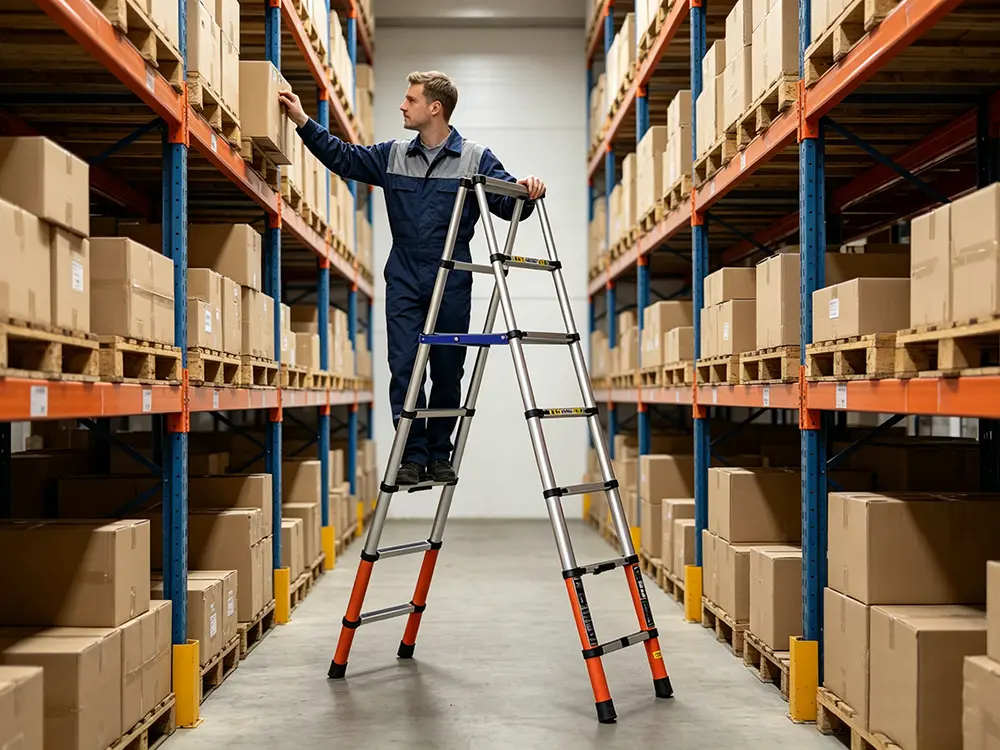
Within the transport and logistics industry, ladders are essential tools for ensuring operational continuity, safety, and efficiency. From accessing the upper cargo bays of trailers and shipping containers to performing maintenance on the roofs of trucks, vans, and warehouse loading docks, a stable ladder provides the necessary elevation for countless tasks. In busy distribution centers, rolling ladders and order-picking platforms are indispensable for staff to safely and quickly access stacked pallets and high shelves, directly supporting the speed and accuracy of inventory management, order fulfillment, and dispatch operations.
The specific demands of the sector shape the equipment used. Robust, non-slip industrial ladders are standard for trailer inspection and loading, while compact, mobile designs enable agility in confined freight yards and crowded warehouses. Many logistics companies strategically utilize a mix of owned and rented equipment, allowing them to access specialized equipment—such as insulated ladders for electrical work on vehicles or telescopic platforms for high-bay lighting maintenance—without incurring excessive capital or storage costs, ensuring both operational readiness and cost efficiency.
Therefore, in transport and logistics, the ladder is a critical yet often overlooked component of the supply chain. It enables the physical access required to maintain the fleet, manage the flow of goods, and ensure the safety of personnel. By providing reliable vertical reach, it helps keep goods moving, assets maintained, and operations on schedule, supporting the seamless flow of commerce from the warehouse shelf to the final destination.